
Nutriiya
A Balanced Diet Is More Than Homemade Food
Featured Blog

Why Healthy Eating Still Doesn't Lead to Weight Loss for Many Indians?

Published on 4 August 2026

You stopped eating junk food. You switched to homemade meals. Maybe you've even started following a diet plan. Yet the weighing scale barely moves. If you've been asking yourself, "why am i not losing weight?", you're not alone. For many Indians, the problem isn't unhealthy food. It's the extra roti, the second serving of rice, the sugary chai, the spoon of ghee and the handful of namkeen that quietly become part of everyday eating. Healthy eating is important, but healthy eating and weight loss are not always the same thing.

Read More
All Blogs

That is the uncomfortable truth: homemade food can still be overeaten.

The Extra Roti Effect: How Indian Families Normalise Overeating

Published on 7 July 2026

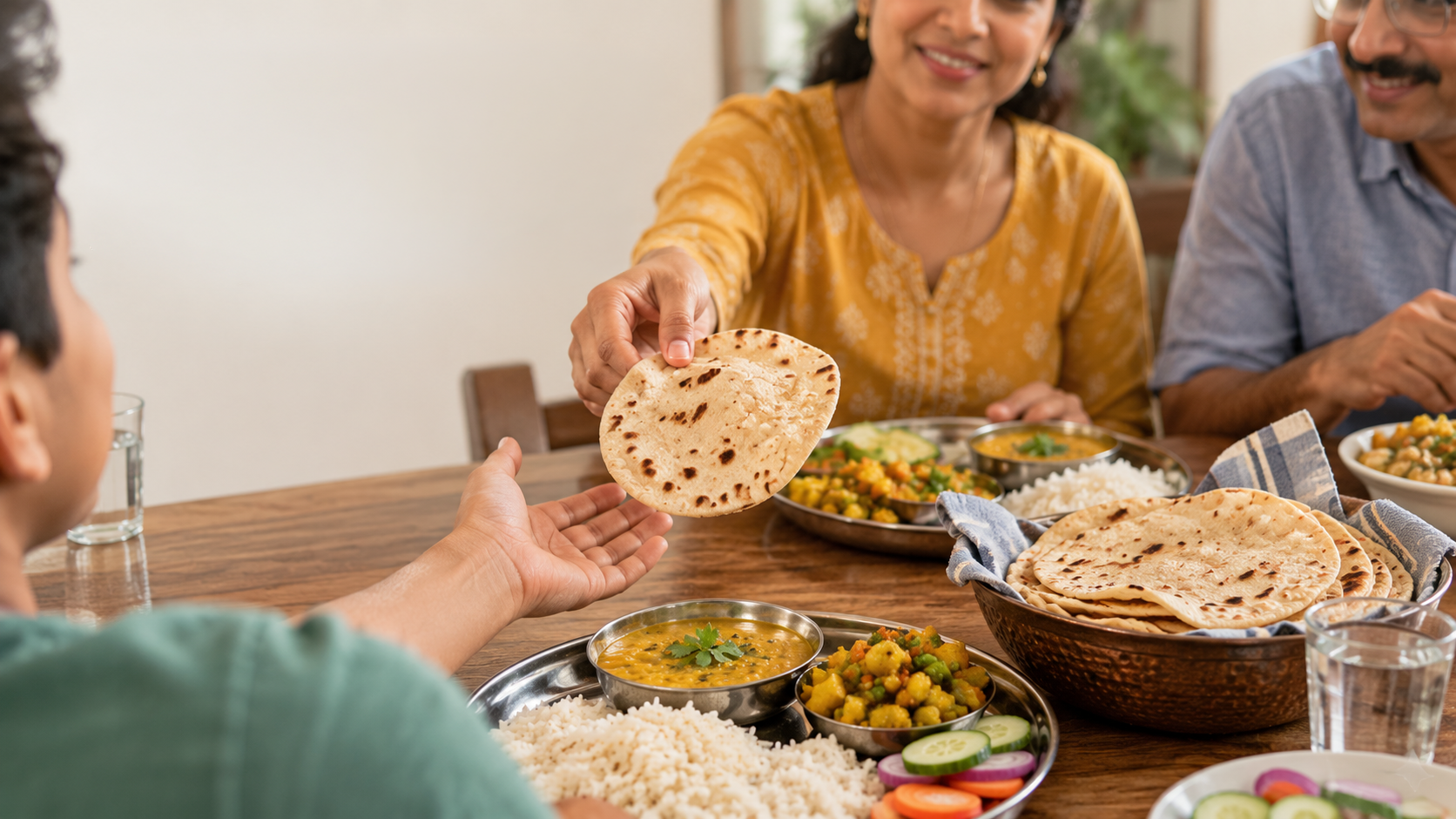
Most Indian overeating does not begin with a cheat meal. It begins with someone at the table saying, “Bas ek aur roti.” Then comes, “Itna kam kaise khayega?” Then, “Ghar ka khaana hai, kuch nahi hota.” Then, one more spoon of rice, one more ladle of dal, one more piece of paratha, one more cup of chai. That is the extra roti effect. It is not about blaming Indian families. It is not about calling Indian food unhealthy. Dal, roti, sabzi, rice, curd, poha, dosa, khichdi and thali can all be part of balanced eating. The problem is not the food itself. The problem is how easily extra portions become normal, emotional and invisible. For anyone trying to build healthy eating habits, improve weight management or practise better portion control, this matters. Because in Indian homes, overeating often hides inside love, habit and hospitality. Nutriiya exists for exactly this gap: helping Indian users understand the meals they actually eat, not some ideal diet chart they cannot follow.

AI can shorten the distance between eating a meal and understanding it.

How AI Can Make Indian Food Logging Less Annoying?

Published on 2 June 2026

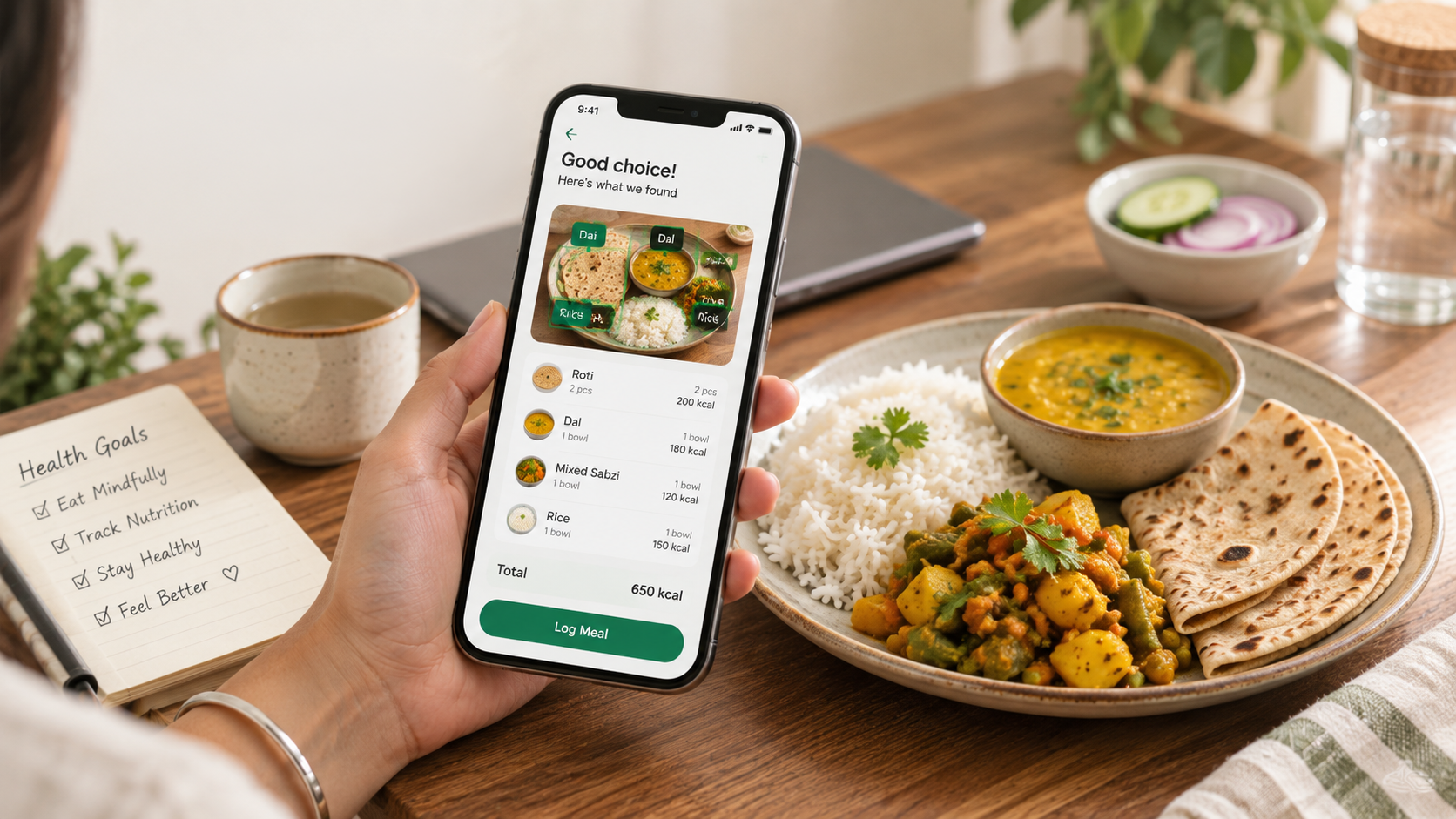
Food tracking sounds useful until you actually begin doing it. You open an app, search for dal, choose between several confusing entries, estimate the quantity, add rice separately, search for sabzi, guess how much oil was used and repeat the same process at the next meal. By dinner, improving your health feels less like progress and more like unpaid data entry. This problem is worse with Indian food. Meals often contain several dishes, recipes vary from one household to another, and portions are measured in katoris, ladles, rotis and instinct rather than exact grams. A smarter AI food tracker can reduce that friction. It may not make every estimate perfect, but it can make logging faster, simpler and far more realistic for the way Indians actually eat.

You've reached the end.