The useful comparison is not which city has the “healthiest” food. It is how availability, convenience, culture and routine influence what people eat repeatedly.
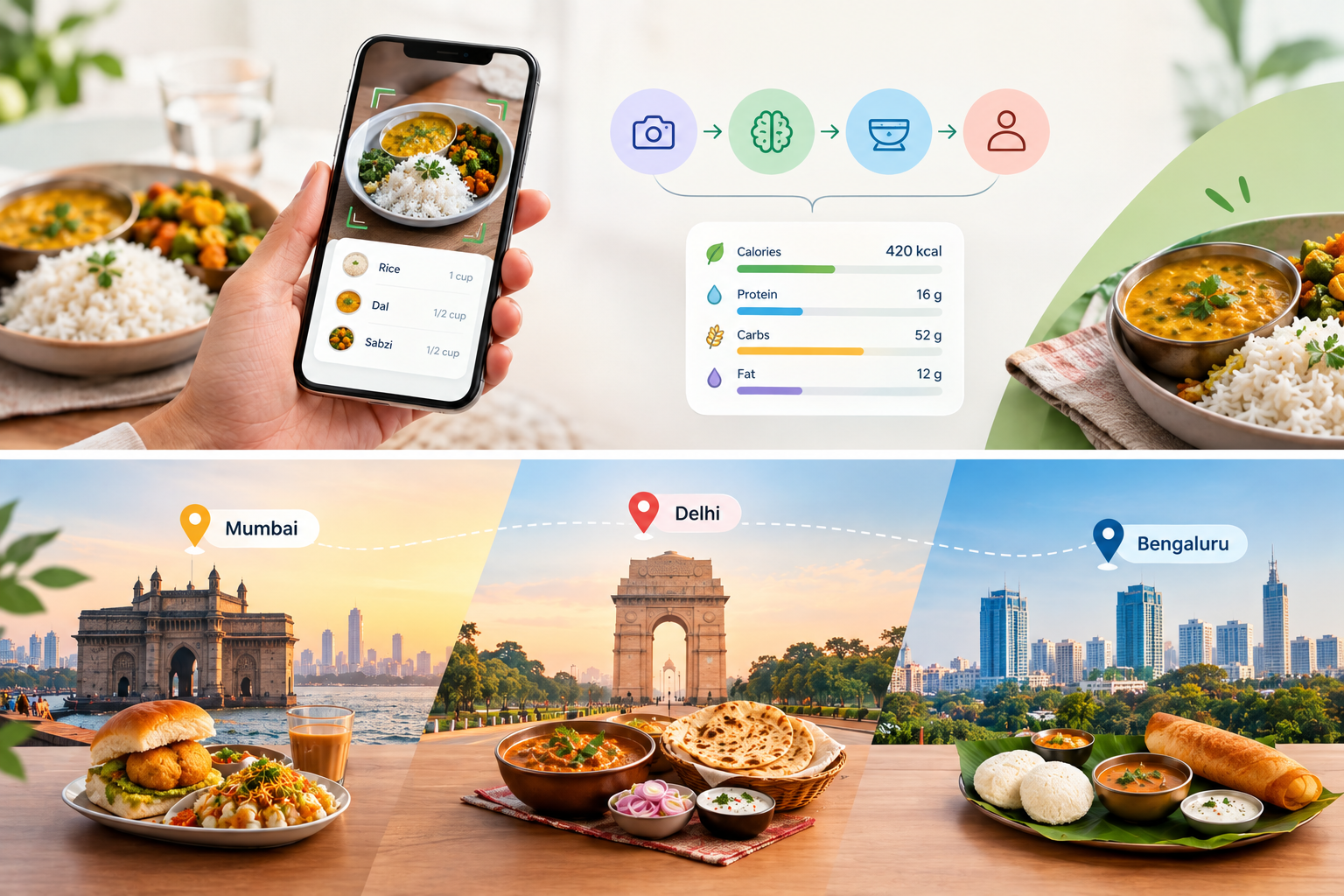
Mumbai food culture reflects the city's long history of migration. Maharashtrian foods coexist with Gujarati, South Indian, North Indian, Parsi, Muslim and many other culinary traditions.
This creates an unusually broad food choice. But having more options does not necessarily produce a more balanced diet.
For someone dealing with long commutes or demanding work schedules, convenience can become one of the strongest influences on food decisions. Research examining changing food practices among urban Indian consumers has identified longer working hours, reduced household cooking, sedentary lifestyles and greater availability of processed foods among factors influencing food choices
Mumbai-specific research also demonstrates why there is no single Mumbai diet. A study examining dietary patterns among women in Mumbai identified distinct patterns associated with different socioeconomic and demographic characteristics.
The practical lesson for Mumbai food habits is therefore less about avoiding local favourites and more about managing the meals that convenience controls. A quick meal can still include vegetables, pulses, curd, eggs, fish, meat or another suitable protein source alongside the foods that provide energy.
The objective is not perfect eating. It is making the convenient option work better.
Delhi food culture has strong North Indian influences, but the city's actual dietary patterns are far more varied than its best-known parathas, kebabs and rich gravies suggest.
Family practices, cultural expectations, convenience and habit all influence food choices. Research involving young adult women in Delhi found these factors were important influences, with limited time for cooking also associated with eating outside the home or purchasing prepared food.
The surrounding food environment matters as well. Research examining Delhi neighbourhoods found associations between restaurant availability and dietary behaviours, although socioeconomic factors were important in explaining some of those relationships.
This illustrates an important distinction: food availability changes the choice set, not the final choice.
Two people can live near the same restaurants, markets and food vendors while eating very differently because their budgets, households, preferences and schedules are different.
For someone following a Delhi diet, healthier eating may therefore involve adapting familiar meals rather than rejecting the city's food culture. Someone who eats outside frequently may need a different approach from someone whose meals are mostly prepared at home.
The Bangalore diet is equally difficult to define. Bengaluru combines established South Indian food traditions with a diverse urban food environment.
Idli, dosa, sambar, rice and regional vegetable preparations coexist with North Indian meals, cafés, bakeries, restaurants, packaged foods and neighbourhood vendors. Research on Bengaluru's urban food system highlights the role of both formal and informal food outlets in household food access.
This makes availability an important part of the city's dietary landscape.
More choice does not necessarily mean more dietary diversity. A person can have access to hundreds of meals and still repeat a small number of convenient choices throughout the week.
Research examining Bengaluru households found variation in dietary diversity and highlighted the importance of small food outlets and informal vendors in food access.
Bengaluru therefore shows how traditional and newer eating patterns can coexist rather than simply replacing one another. A person's actual routine depends on factors such as household practices, budget, preferences, cooking access and time.
Neither can be named a universal winner.
A city does not have one diet. Mumbai and Delhi contain enormous variation between households and neighbourhoods, shaped by income, culture, occupation, age, food access and personal preference.
That makes Mumbai vs Delhi food comparisons more useful when viewed through four questions:
Availability: What foods are easiest to access?
Convenience: What can you realistically eat when time is limited?
Culture: Which foods are familiar and socially important?
Routine: Which choices do you repeat often enough to shape your overall diet?
These questions also explain why moving cities can gradually change someone's eating pattern. A person who relocates from Delhi to Mumbai may encounter different work routines, neighbourhood food options and social eating habits. Over time, those environmental changes can alter what becomes convenient and familiar, even without a deliberate decision to change their diet.
The broader lesson is that healthier eating habits in India cannot always be separated from the environment in which those habits have to work.
ICMR's work on Indian dietary patterns documents substantial regional variation, reinforcing why Indian diets should not be treated as one uniform model.
So, start with your actual food environment.
What do you eat when you are rushed? Which meals are usually ordered? What foods are easiest to find near your home or workplace? How often do you rely on the same convenient meals? Where do pulses, vegetables, fruits, dairy, eggs, fish, meat or other protein sources fit into the wider pattern?
This approach also explains why generic nutrition advice can fall short. A recommendation is easier to follow when it fits the person's food availability, cultural preferences, schedule and actual eating habits.
That is where personalised nutrition becomes useful. Nutriiya's role sits at the intersection of Indian food, individual context and everyday decision-making, allowing nutrition to be considered within the reality of how a person actually eats rather than against an abstract “perfect diet.”
Your city influences what is easy.
Your circumstances influence what is practical.
Your repeated choices ultimately shape your diet.
Understanding all three creates a more realistic foundation for better everyday nutrition decisions.
Yes. Food availability, affordability, cultural traditions, convenience, household practices and work schedules can all influence eating behaviour.
There is no universal answer. Both cities contain diverse populations and food environments, so an individual's overall dietary pattern matters more than their city.
Availability changes which choices are accessible and convenient. It does not determine what someone will eat, because preferences, budget, culture and routine also influence food decisions.
Yes. Regional cuisines can include a wide range of grains, pulses, vegetables, fruits, dairy and animal-based foods. The overall dietary pattern, preparation, portions and individual nutritional needs matter more than whether a food belongs to a particular region.
Share this blog on: